
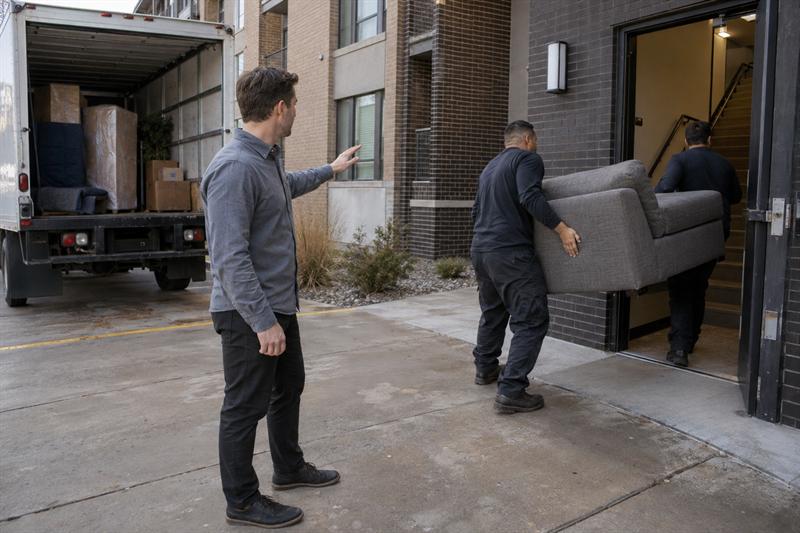
Many local moves get harder for the same reason: the plan is built around distance instead of logistics. In metro Denver, a move across town can be tougher than a longer move if the building has tight move windows, the truck has nowhere to park, or large furniture needs extra planning.
At Express Movers, this comes up regularly with local moves. The drive is not always the main issue. Access, timing, and overlooked details often shape how smoothly the day goes.
Why local moves in metro Denver need more planning than people expect
A local move is not automatically simple because the addresses are close together. In metro Denver, some of the biggest delays start at the pickup or delivery point, not on the road.
This is especially true when the move involves apartments, condos, older homes, shared loading areas, or limited curb access. Many people focus on packing and forget the building itself. That is often where the plan starts to break down.
Distance is only one part of the move
Short travel time does not solve elevator reservations, long carries from the curb, tight stair turns, or limited truck placement. A move with easy driveway access runs very differently from one where the crew has to work around a loading-area schedule or carry items down a long hallway.
If those details are missed, the move can slow down quickly. That usually leads to a longer day, more coordination pressure, and confusion about what the job actually requires.
The biggest delays usually start before the truck arrives
Missed building coordination, blocked access, and unclear furniture-handling needs are some of the most common causes of delays. This often gets worse when the mover is working with incomplete information, especially at apartment or condo buildings.
That is why early planning matters. If the truck arrives and no one has reserved the elevator or confirmed truck access, the day may start behind schedule and stay there.
Start with the details that affect your quote and schedule
If you want a local move to stay organized, start by gathering the details that shape the work. A clearer plan usually leads to a clearer quote and a more realistic schedule.
This is also where many quote problems begin. A room count helps, but it does not explain whether the move includes stairs, a narrow hallway, or a heavy sectional that needs extra handling.
Know your move type: house, apartment, condo, or townhome
The type of property matters because it changes the access plan. A house may offer simpler truck placement, while an apartment or condo often comes with move windows, elevator rules, or specific loading areas.
Both addresses matter. A move from a house into a condo can be just as access-heavy as a move between two apartment buildings, and that often affects timing more than mileage.
List stairs, elevators, long carries, and heavy items early
These details should be identified before you request pricing, not after the move is on the calendar. Many local moves look straightforward at first and become much more involved once the full layout is clear.
- Stairs at either location
- Elevator access or reservation requirements
- Long walks from the truck to the unit
- Heavy or oversized items like sectionals, safes, appliances, or gym equipment
- Tight turns, narrow entries, or awkward furniture paths
If you leave those details out, the quote and schedule may be built on incomplete assumptions. That is where pricing confusion and move-day slowdowns often begin.
Build a simple inventory before asking for pricing
Room count alone is not always enough. A simple inventory gives the mover a better picture of what is actually being handled, especially when the move includes large furniture, items that need disassembly, fragile pieces, or things that are staying behind.
The goal is not a perfect spreadsheet. It is to identify what affects labor, timing, and access so the quote reflects the real move instead of a rough guess.
If you are comparing quotes, it also helps to review what to look for in a Denver moving company before you book. The right questions early can help prevent bigger problems later.
Access planning: what can slow down a Denver local move
This is the part of local move planning that generic moving articles often miss. In metro Denver, access conditions shape a large part of the day.
When access is tight, loading takes longer, carrying takes longer, and small delays start stacking up. This is where a short-distance move can stop feeling simple.
Parking, loading zones, alley access, and truck placement
Parking constraints can slow down local moves even when the two addresses are close together. If the truck cannot get near the entrance, the crew ends up dealing with longer carry distances and more back-and-forth movement.
That usually means more time spent getting items to and from the truck. Common issues include narrow streets, crowded curb space, alley-only access, or buildings with limited loading options.
- Is there space near the entrance for the truck?
- Are there reserved loading zones or time restrictions?
- Will the crew need to load from an alley or side entrance?
- How far is the walk from the truck to the door?
If you are dealing with tight curb access or a long walk from the truck to the unit, the move may require more planning. That usually means the access layout should be clear before the move is scheduled.
Building move windows, elevator reservations, and HOA rules
Many apartment and condo buildings have their own moving rules. These can include reserved elevators, approved move hours, specific entrances, wall or floor protection requirements, and loading dock procedures.
This is where problems often start because the building rules were never factored into the schedule. A one-day move can feel much tighter if the building only allows move-ins during certain hours.
- Reserved elevator requirements
- Limited move-in or move-out time windows
- Loading dock or designated entrance rules
- Building paperwork or certificate requirements
- Protection requirements for floors, corners, or hallways
If those restrictions are not confirmed in advance, the move can become rushed, delayed, or partially blocked by the building’s procedures.
Older neighborhoods and tight layouts can change the plan
Older homes and tighter neighborhood layouts can also affect local moving time. Limited staging space, steeper access, older staircases, and tighter parking conditions can change how furniture is loaded and carried.
This matters because route simplicity does not mean loading simplicity. A move across a short section of metro Denver can still be the harder job if the physical layout works against the crew at both ends.
If the move involves access limits, building rules, or large furniture, it helps to plan it like a logistics-heavy move, not just a basic across-town job.
- The truck cannot park close to the entrance
- The building has elevator or move-window restrictions
- There are multiple stairs, long carries, or tight turns
- Large furniture, appliances, or bulky items need extra handling
When two or more of these are in play, the move usually benefits from tighter planning and more accurate coordination before the date is locked in.
Timing your move to reduce stress and scheduling problems
Timing matters because local availability is shaped by demand and by how easy the move is to schedule. The closer you get to the move date, the less room there is to solve access issues cleanly.
This often gets harder when the move is tied to a lease end, a preferred weekend, or a building with strict time windows. The more fixed the date is, the more important the prep becomes.
How early to book depends on access and demand, not just distance
A short-distance move still needs lead time if the property has access restrictions or the move date is not flexible. A simple house move is different from a condo move with reserved elevators and limited loading times.
If you are working around building rules, the real deadline is often earlier than the actual move date. Access details need to be resolved before the crew can work efficiently.
Why end-of-month and weekend schedules fill faster
Many local customers want the same dates. Lease changes, work schedules, and weekend availability all push demand into a narrower window.
That concentration can lead to fewer scheduling options and less flexibility if anything changes. If the move date is fixed and the access plan is still unclear, the pressure increases across the job.
Flexibility helps, but only if the access plan is already clear
Moving the date around can help with availability, but it does not solve the wrong problem if the real issue is building access or truck placement. This is common with local moves that look flexible at first but still run into the same obstacles on a different day.
If you are adjusting dates without confirming the layout and restrictions, the same delay risk often follows the move no matter when it happens.
A practical prep checklist for the week before moving day
The week before the move is where the plan either tightens up or starts to drift. This is a good time to confirm the details that often cause avoidable delays.
For a broader prep list, readers can review the Denver moving checklist: how to prepare your home for a move. It pairs well with the local planning steps below.
Confirm access details at both locations
- Reconfirm truck access and parking arrangements
- Verify entry points and any building instructions
- Confirm elevator reservations or loading dock timing
- Make sure both pickup and delivery locations are ready for the move window
If either address has changed its access rules or timing, that needs to be addressed before moving day. Small changes at the building level can create some of the biggest disruptions.
Separate essentials, valuables, and fragile items
- Keep daily-use items easy to reach
- Set aside valuables and important documents
- Clearly identify fragile boxes or items with special handling needs
This keeps the move more organized and reduces confusion during unloading. It also helps avoid the common mistake of packing critical items too deeply into the main load.
Label rooms and flag anything that needs special handling
- Label boxes by room, not just by contents
- Flag furniture that needs disassembly
- Mark oversized or awkward items clearly
- Separate anything that is not going to the new location
That last step matters more than people expect. If the crew has to sort moving items from items staying behind, unloading decisions can slow down and time gets lost where it should not.
When it helps to coordinate moving, heavy-item handling, or furniture delivery together
Some local moves become harder because the moving plan is split across too many separate tasks. If large items are arriving, old items need to be removed, or heavy furniture requires special handling, those details should be coordinated with the move instead of treated as separate problems.
At Express Movers, this is one reason a combined service approach can help. When local moving overlaps with bulky-item handling, furniture delivery, or item removal, the plan often stays cleaner when those logistics are considered together.
Common situations where bundled logistics make the move easier
- A large furniture delivery is scheduled near the same move date
- Bulky items need to be moved through tight hallways or staircases
- Old furniture or unwanted items need to be cleared out first
- Building access limits make multiple separate appointments harder to manage
If the move already has tight timing, each separate appointment creates another chance for delays and handoff problems. In those cases, coordination is not just more convenient. It is often a cleaner way to keep the move organized.
For readers dealing with oversized furniture, local furniture moving support in Denver can help clarify what should be planned separately and what can stay within the same moving schedule.
Questions to ask before hiring a metro Denver moving company
The right questions help you see whether a mover understands the work or is just pricing the mileage. This matters most when the move includes building restrictions, heavy items, or difficult access.
If those issues are not addressed upfront, the move usually becomes more reactive than planned. That is when clarity starts to break down.
Pricing clarity questions
- What move details affect the quote the most?
- Have stairs, elevator access, and long carries been accounted for?
- How are heavy or oversized items handled in the planning process?
- What happens if access is different from what was originally described?
These questions matter because quote problems usually start with missing conditions, not with the base move itself.
Scheduling and move-day coordination questions
- What details should be confirmed before the move date is finalized?
- How do building restrictions affect scheduling?
- What parts of the plan depend on truck access or move windows?
A mover who asks detailed scheduling questions is usually trying to prevent predictable problems. A mover who does not ask them may be building the day around incomplete assumptions.
Access and heavy-item planning questions
- How often do you handle apartment or condo moves with building restrictions?
- How do you plan for bulky items with tight stairs or narrow entries?
- Can related logistics be coordinated if furniture delivery or item removal is part of the move?
If you already know the move has tight access or oversized items, these are not extra questions. They help determine whether the plan fits the actual job.
Key Takeaways
- Metro Denver local move planning is driven by access, timing, and prep, not just distance.
- Property type, stairs, elevators, long carries, and heavy items should be identified early.
- Parking limits and building rules are where many local delays begin.
- End-of-month timing and fixed move dates can reduce flexibility quickly.
- Coordinating moving, heavy-item handling, and related services can simplify the overall schedule.
Conclusion
The real challenge with local moves in metro Denver is not always the drive. It is often the access plan, the building restrictions, and the missing details that turn a simple move into a slower, more stressful one.
If those issues are not addressed early, the move can take longer, become harder to coordinate, and create avoidable pricing confusion. That is why planning around access, timing, and handling needs matters from the start.
Express Movers is a practical next step for local moves that need a clear plan, upfront quote guidance, and support for the real conditions that shape moving day. If your move includes tight scheduling, difficult access, bulky furniture, or multiple moving parts, it makes sense to request a free quote for your metro Denver move before those details turn into delays.
Company Approach
Express Movers approaches local moving the way many customers wish the process had been explained from the beginning: start with the layout, the restrictions, and the handling needs, then build the move around those realities. That often leads to better planning than treating every local move like a short drive with boxes.
This approach also fits the way real moves unfold. When furniture delivery, bulky-item handling, or cleanout needs overlap with the move itself, keeping those logistics connected can reduce friction and help keep the schedule from splintering into separate problems.
FAQ
How far in advance should local movers be booked in metro Denver?
How far ahead to book depends on how constrained the move is, not just how close the addresses are. A basic house move with easy parking is easier to schedule than an apartment move with a reserved elevator, limited dock access, and a fixed lease deadline.
End-of-month and weekend dates usually get tighter faster because more people are trying to move at the same time. The key point is that short distance does not mean a short planning window. If access is restricted, the real scheduling pressure often starts earlier.
What details should be shared to get an accurate local moving quote?
The most important details are the property type at both locations, stairs, elevator access, carrying distance, large or heavy furniture, and a basic inventory of what is actually moving. Those are the details that shape labor, timing, and truck setup.
For example, a one-bedroom apartment with a long hallway, a reserved elevator, and a large sectional does not move like a one-bedroom ground-floor unit with direct access. The difference is not the room count. The difference is the work required to reach and handle the items.
Do apartment and condo moves in Denver require extra planning?
Yes. Apartment and condo moves often require more coordination because building rules shape the move window, entry route, and loading setup.
Common restrictions include reserved elevators, approved move hours, designated entrances, and hallway or floor protection requirements. These moves are often controlled by the building schedule as much as the mover’s schedule, which changes how the day needs to be planned.
What usually causes delays during a local move?
Most delays start with access and communication problems, not with the drive itself. Common issues include blocked parking, long carries, missing elevator reservations, building restrictions that were not shared in advance, and heavy items that need more planning than expected.
A mismatch between the original description and the actual move also slows things down quickly. If the crew arrives expecting one layout and finds another, the schedule may start slipping at the first stop.
Can heavy-item handling or furniture delivery be coordinated with a local move?
Yes, and it often helps when the move already has tight access or time limits. If a large delivery is arriving during the same week, or bulky items need to be removed before the move, combining those logistics can reduce handoff issues and extra scheduling pressure.
This matters most in buildings with limited move windows or loading access. Multiple separate appointments often create the same access problem more than once.
Is a local move priced only by distance?
No. Distance matters, but local move pricing is also shaped by the conditions at each address. Stairs, elevators, long carries, truck placement, oversized items, and building restrictions all affect the amount of work involved.
A short move between two access-heavy buildings can be more complex than a longer move between two easy-access homes. What changes the scope is not just how far the truck travels. It is how difficult the move is to perform at both ends.